About
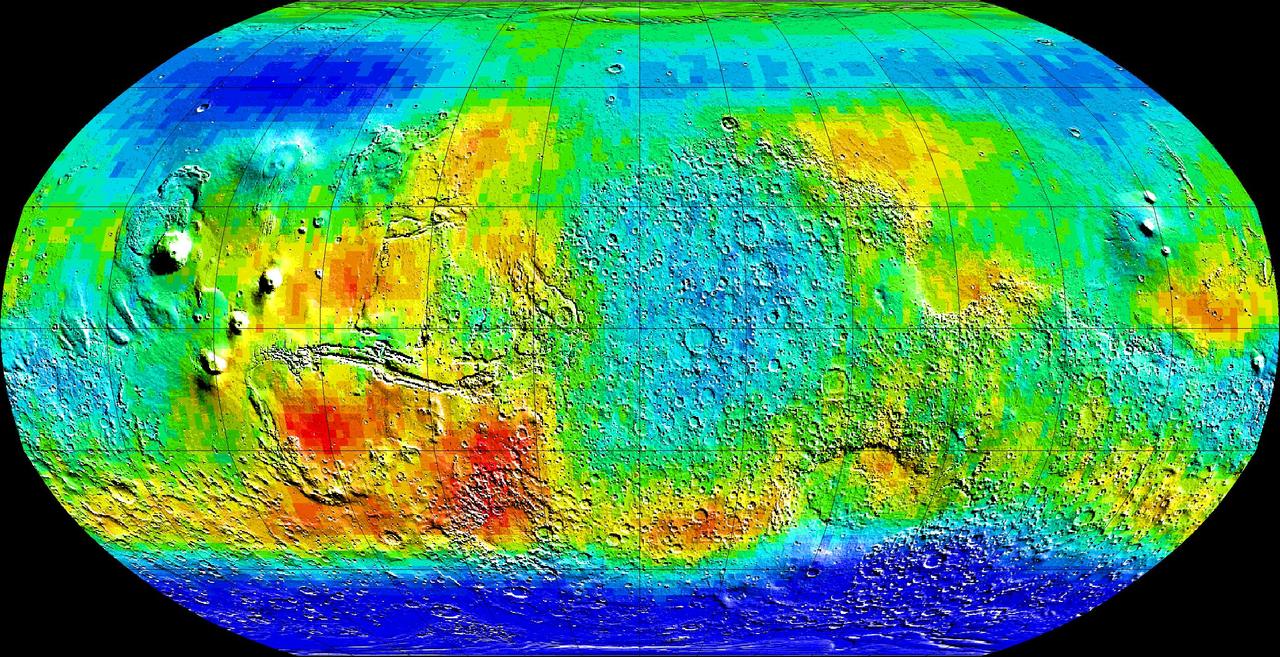
Observations by NASA's 2001 Mars Odyssey spacecraft show a global view of Mars in intermediate-energy, or epithermal, neutrons. Soil enriched by hydrogen is indicated by the deep blue colors on the map, which show a low intensity of epithermal neutrons. Progressively smaller amounts of hydrogen are shown in the colors light blue, green, yellow and red. The deep blue areas in the polar regions are believed to contain up to 50 percent water ice in the upper one meter (three feet) of the soil. Hydrogen in the far north is hidden at this time beneath a layer of carbon dioxide frost (dry ice). Light blue regions near the equator contain slightly enhanced near-surface hydrogen, which is most likel — NASA JPL · 2002. ABD devlet eseri: kamu mali, ticari islerde de serbestce kullanilabilir.
Source and licence
This work is public domain or openly licensed. The licence terms are published by the source.
How do I open it?
Use the Shopy 101 app to download it or read it in place. Anything you add to your library stays the same on every device.