About
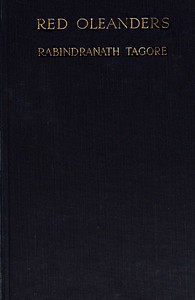
Raktakarabi (Bengali: রক্তকরবী, lit. 'Red Oleanders') is a symbolic play by Rabindranath Tagore. It was written at Shillong in 1923/1924 (1330 BS), and was originally titled Yaksapuri. It was published in the Ashwin 1331 (September/October 1924) edition of Prabasi.
The play is set in a world where a greedy king forces his subjects to mine for gold. One of the main characters is Nandini, a woman whose sole ornament is jewels made from red oleanders, which she wears as a tribute to Ranjan, the man she loves.
In a 2016 review of a production of Raktakarabi at the Academy of Fine Arts, Kolkata, the play is called 'Tagore's finest protest against totalitarianism'. According to writer Pratap Narayan Biswas, the story of Raktakarabi is inspired by a play by August Strindberg and the character of Raktakarabi, Nandini, is similar to the character of that play. According to literary critics, Tagore expressed his socialist spirit through this play. However, according to Mazharul Haque Lipu of B
Source and licence
This work is public domain or openly licensed. The licence terms are published by the source.
How do I open it?
Use the Shopy 101 app to download it or read it in place. Anything you add to your library stays the same on every device.